
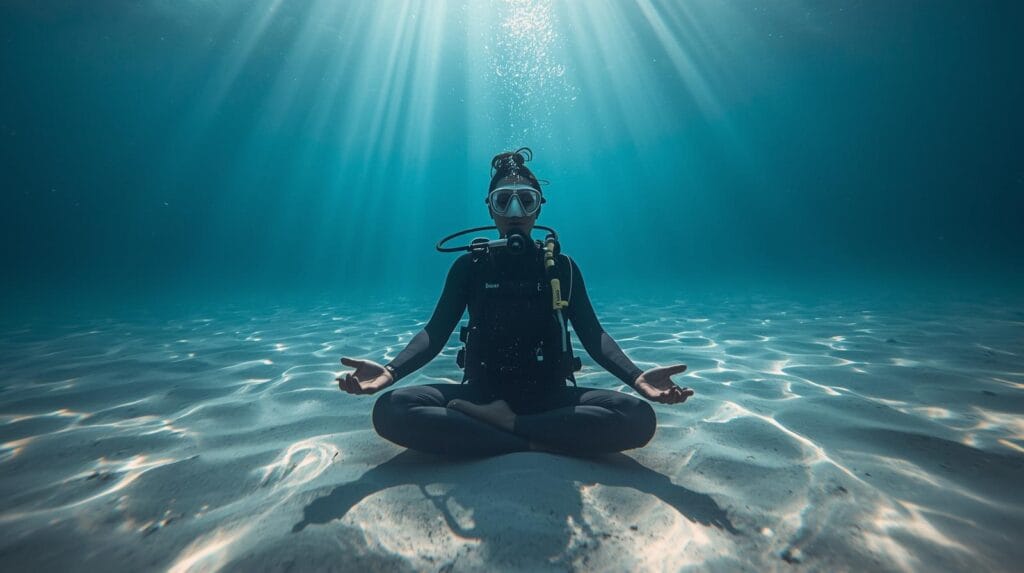
What to Expect on Your First Meditation Dive:
Embarking on your first meditation dive is not just a journey into the depths of the ocean; it’s also a voyage within. This unique experience combines the soothing embrace of water with mindful meditation techniques, allowing you to find tranquility and connection with nature. To ensure a smooth and fulfilling dive, here’s what you need to know.
Step 1: What You Need to Be Prepared
Gear, Mindset & Safety Essentials
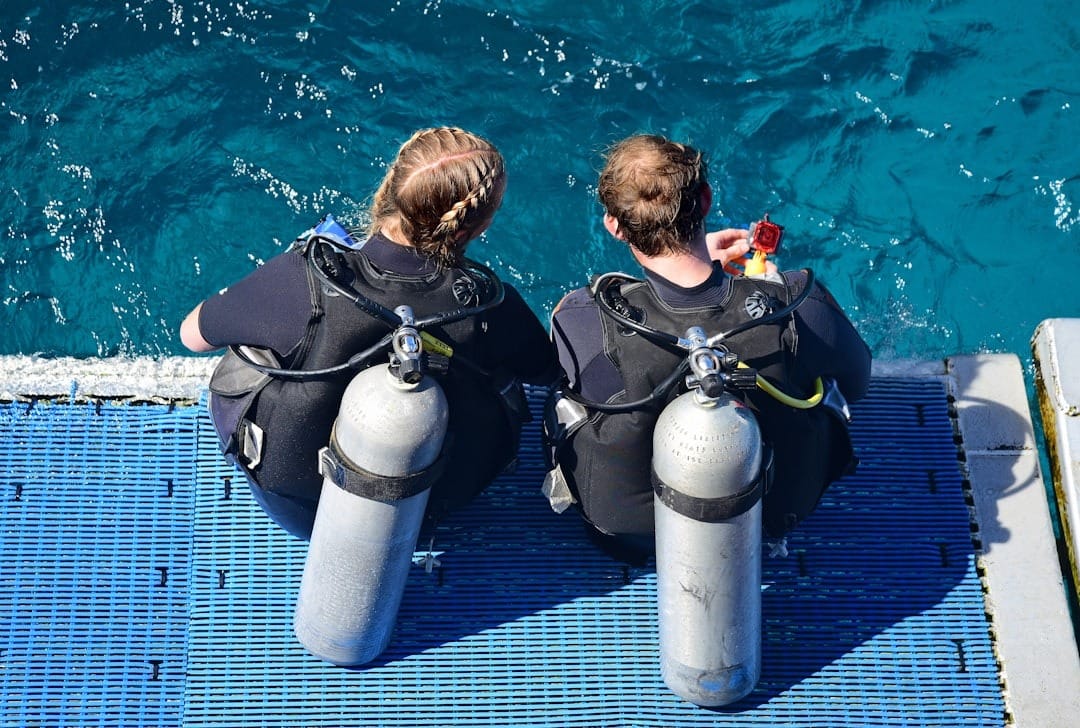
Gear:
Comfort is paramount when you’re preparing for a meditation dive. Make sure your gear is not only functional but also allows for easy movement. Look for gear that fits well while keeping you comfortable throughout the dive.
Mindset:
A successful meditation dive begins with the right mindset. Before entering the water, your instructor will carefully guide you through simple breathing exercises and meditation techniques that you’ll later practice underwater. As you prepare, you’ll learn how to calm your body, focus your mind, and connect with your breath. By starting your dive with clarity and intention, you create the perfect foundation for a meaningful underwater experience—one that feels peaceful, present, and exactly what you’ve been seeking.
Weights:
Unlike regular diving, a meditation dive utilizes negative buoyancy. Negative buoyancy means that you have enough weight to stay on the bottom of the dive site, even when doing deep inhales and exhales. But don’t worry about managing all of those extra weights, your instructor will help you maneuver them in and out of the water.
Communication:
Clear communication signals is essential for a successful meditation dive. Having predefined signals ensures safety and helps maintain focus during your dive. Know when to end the dive calmly to transition back to your natural state.
Step 2: Breathing Techniques
Improve your meditation dive by mastering mindful breathing.
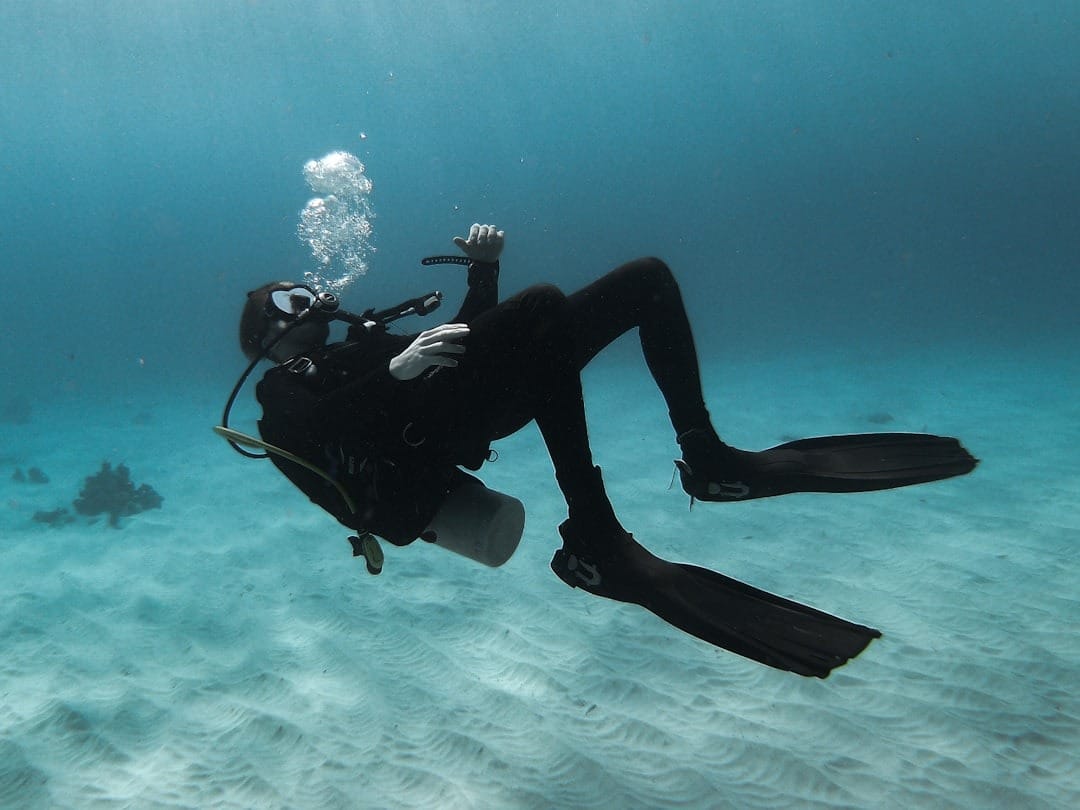
Box Breathing:
This technique involves inhaling for four counts, holding the breath for four counts, exhaling for four counts, and pausing for another four counts. This rhythmic breathing can ground you, calming your mind and preparing you for the experience ahead.
Diaphragmatic Breathing:
By using your diaphragm rather than shallow chest breathing, you facilitate deeper and more soothing breaths—essential for creating a peaceful state of mind as you settle into the depths.
Step 3: Meditation Tips
Essential meditation diving tips for improving focus, breath control, and underwater mindfulness.
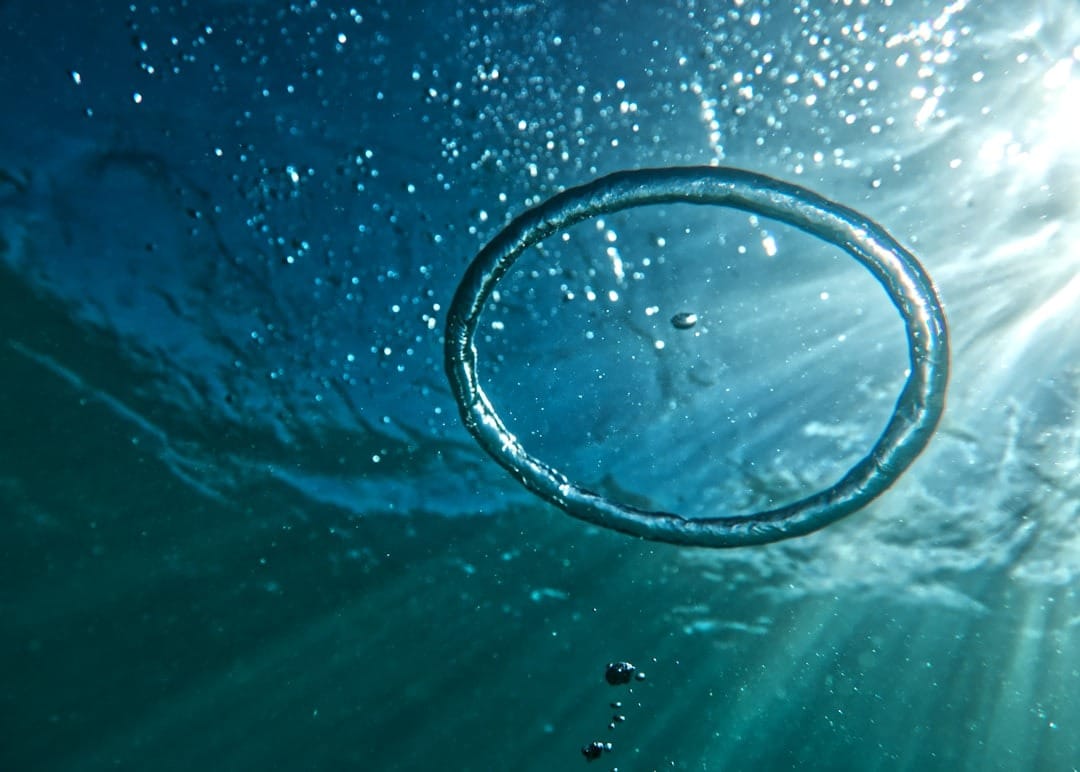
Bubbles:
Observe the bubbles rising from your exhaled breath. They can serve as a meditative focal point, helping you to center yourself and immerse into the moment.
Visual Cues:
Taking in the underwater landscape can be mesmerizing. Let the visual wonders guide your meditation, drawing you deeper into the experience while fostering a sense of reception and awareness.
Step 4: Experience the Meditation Dive
Dive into calm awareness and discover meditation underwater.
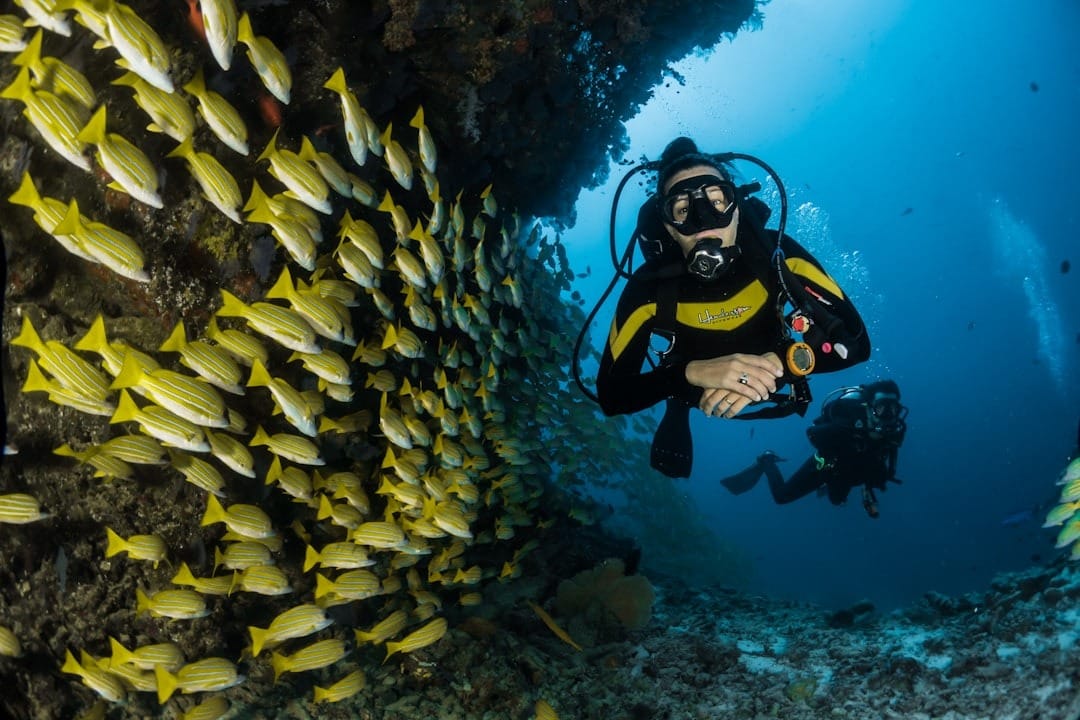
Your meditation dive can be an awakening. Expect sensations ranging from sensory deprivation when submerged in silence, to sensory immersion as you embrace the underwater beauty around you. These contrasting experiences can lead to profound spiritual and emotional breakthroughs, allowing you to connect with feelings of tranquility, calm, oneness, and connectedness with the world around you.
As you prepare to embark on this journey, allow yourself to be fully present. Breathe deeply, surrender to the water, and trust in the transformative power of the meditation dive. May it lead you to a newfound appreciation for both the ocean and your inner self. Dive deep, and enjoy the serenity that awaits.