
What is a meditation dive?
Simply put, a meditation dive is a dive with meditative intent.
Divers remain still – sitting or hovering – and focus on breathing techniques. The sensory input of the water mixed with intention puts divers in a deeply relaxed state.
There are many scientific explanations for how diving enhances a meditation practice, such as the Blue Mind Theory, and the Mammalian Dive Reflex.
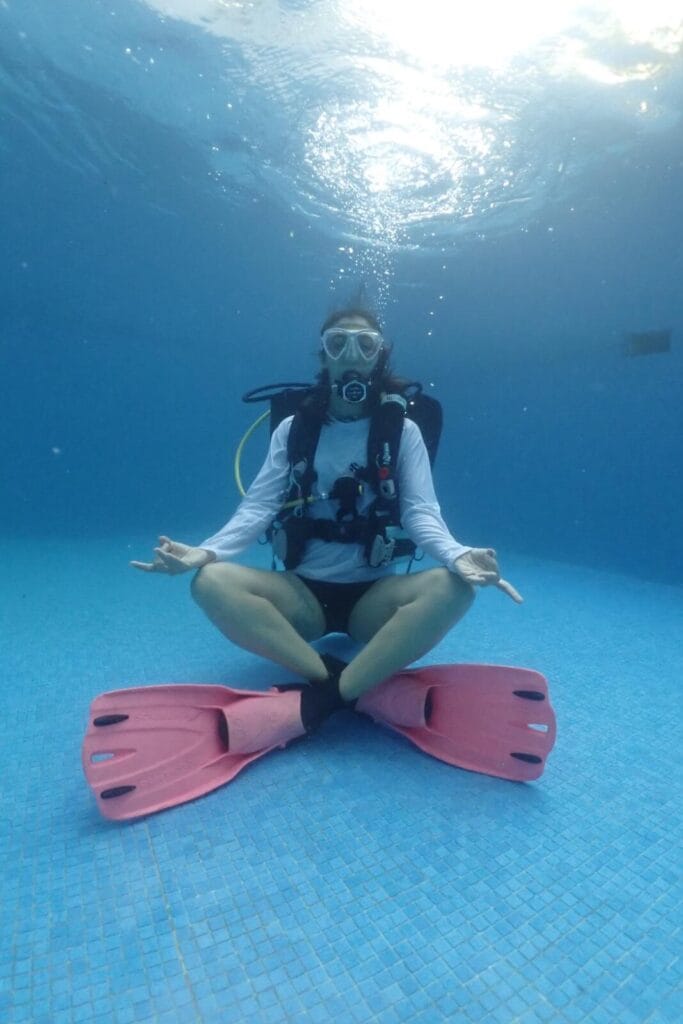
How does a meditation dive work?
Just like any dive, there are three parts to a meditation dive: 1) the briefing; 2) the dive; 3) the debrief.
- The Briefing
Depending on the plan for the dive depends on which breath pattern we focus on. We practice on land doing a full meditation for each breath technique we are going to use while verbal cues are still available. - The Dive
Underwater, you first get comfortable. You will position your gear and weights in a way that feels good to you. After that, you put your pressure gauge out so the instructor can easily see it. This lets you fully detach from responsibilities because someone is reliably checking your air. Then, you settle in to the meditation you practiced on land. Your instructor monitors your breathing, watches your comfort level, and checks all dive limits, such as time and gas use. Your job – relax inward. - The Debrief
Back on the surface, it is normal to feel disorientated or elated. You may need time to come back to your baseline. That is ok! Then, you will write about your experience. There will be journal prompts for inspiration, or you can free write if that calls to you. The most important part is to digest your experience. We also calculate your gas consumption and compare this to your normal breathing rate.
A meditation dive teaches how to connect with your breath. The benefits of this are endless, but primarily affect anxiety, buoyancy, and gas consumption.
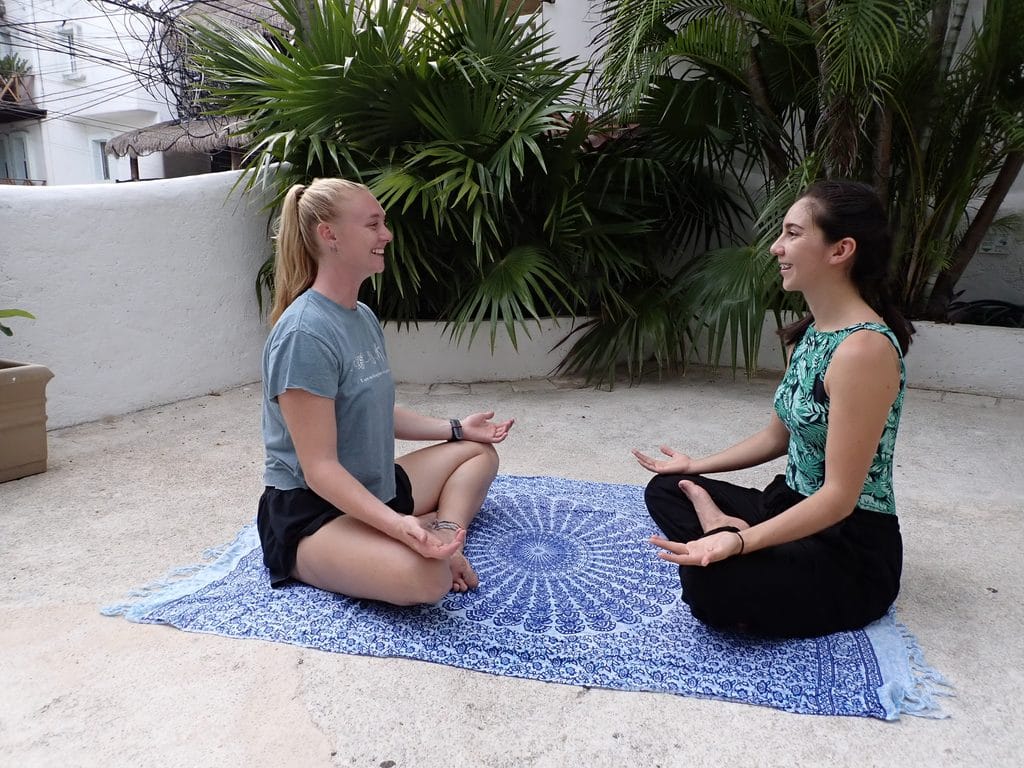
How to prepare?
There are 3 things you should do to prepare for your meditation dive.
- Be well rested. Sleep is very important. Ensuring you arrive well rested is essential to creating the best experience for yourself.
- Arrive hydrated. Breathing dry air and meditating in salty water will make you dehydrated. Honor yourself by arriving to the dive already hydrated.
- Leave expectations at the door. Going into any type of meditation, with an expectation of how you will feel afterwards actually prevents you from entering a meditative state. In meditation, you learn how to detach from expectations and let whatever experiences, feelings, or sensations you have occur exactly as they unfold. Having expectations creates a need for control, which contradicts the idea of meditation.
What to bring to your first meditation dive?
- Warm dive clothes. You may get cold! If you have extra layers like thicker booties, neoprene vest, hoodie, or anything else that helps keep you warm in the water, I recommend bringing it.
- Long sleeves. On your first meditation dive, you will start either by sitting or laying in the sand. Protect your skin from the sand and potential floating particles by wearing long sleeves in the water. This can either be a rash guard and swim leggings, or a full coverage wetsuit – whichever you are most comfortable in.
- Reusable water bottle. Dehydration is a major problem for all divers, and meditation divers are no exception. Stay hydrated by bringing your own reusable bottle to care for yourself and the planet.
- Towel. Personally, I love a warm towel to dry off as soon as I get back from the boat.
- Journal. Journaling is an important part of the post dive procedure. Some divers prefer to write their thoughts on their phones, while others bring their favorite personal journal from home. Whichever your preferred medium, just make sure it is ready for all of your post dive ramblings.
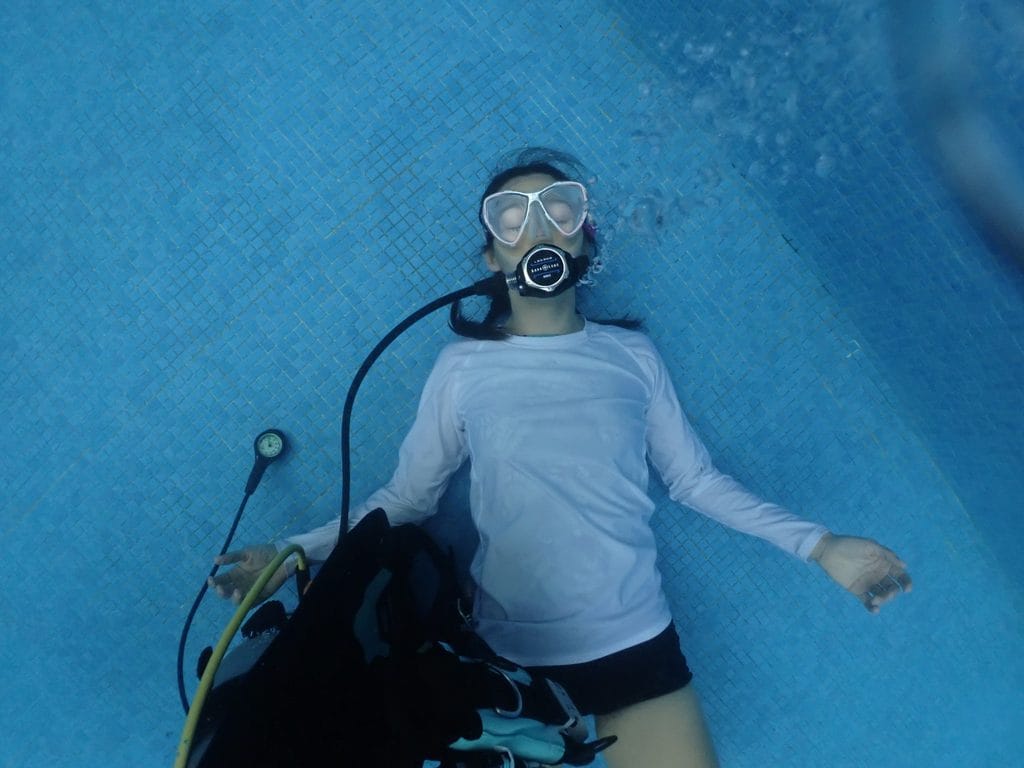
What to do after a meditation dive?
A meditation dive can be an intense emotional experience. Often divers find themselves feeling quiet, pensive, or otherwise spent after a meditation dive. This is normal. This can be for many factors such as a large emotional release, excess chemicals released during the meditation, or just from the exertion of diving. Practice self care by prioritizing your own needs after a meditation dive.
- Rest. Your nervous system may need some time to come back to your baseline. This is normal. Allow yourself time after the meditation to process any feeling that might have come up and reorient yourself into the noisy world on land.
- Refuel. It’s no secret that diving makes you hungry – and meditation dives are no different! Make sure you eat something nourishing to refuel your body. I always provide my divers with cookies and fruit for some much needed sugars to replenish the body.
- Hydrate. Just like any other dive, the combination of dry, compressed air and salt water will leave you feeling dehydrated. Hydrating after a dive is essential to a healthy body. I always provide my divers with their choice of water, juice, and electrolytes to keep them healthy after meditation dives.
- Journal. Many divers find it helpful to write about their underwater experience. It helps them remember what they experienced. Some divers have important realizations, difficult emotions to process, or want to enjoy the blissful experience they felt underwater. Everyone has different experiences, and find it helpful to record their experiences, especially after multiple meditation dives.
- Practice gratitude. Most divers feel a renewed gratitude for their lives after a meditation dive. No matter your experience, practicing gratitude will help you feel connected to yourself, your connection to the planet, and maybe even to this life itself.
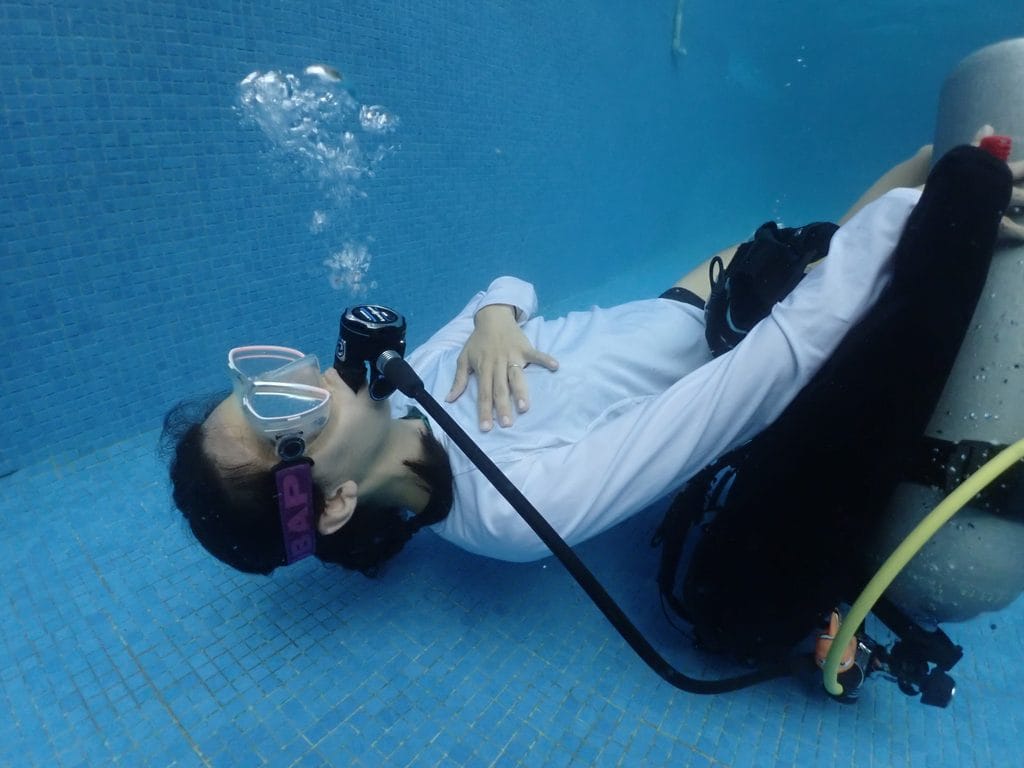
Meditation dive FAQs:
Does a meditation dive impact the environment?
We are very careful to limit our impact on the environment. We only do meditation dives on sections of sand that are commonly used for training. Limiting ourselves to this small area means that a smaller section of sand is disturbed for human use, like how a hiking trail allows people to enjoy nature without stomping over all of the wildflowers. We also practice meditating in neutral buoyancy using a buoy and line which creates zero impact on the environment.
Who does a meditation dive benefit?
Everyone can benefit from a meditation dive, not just devout yogis (although they benefit too!). Many divers who seek out this experience are anxious divers who need a bit more time in the water to feel comfortable with diving. Others find meditation diving as a way to process difficult seasons of life or to process large emotions. Some find meditation diving to learn the best breathing techniques to improve their gas consumption and buoyancy.
No two meditation divers are the same – everyone finds it for a reason specific to them.
Do I have to be certified?
Yes. You must already be a certified diver to do a meditation dive. This dive is available to Open Water divers and beyond.
I have anxiety, can I still do a meditation dive?
Yes! In fact, most meditation dives I conduct are for divers with anxiety. Meditation diving slows down all of the actions and allows you to sit comfortably in the water. This creates a unique environment for anxious divers to get accustomed to diving without worrying about following the group, buoyancy, or buddy tasks. While anxious divers report improved confidence in the water, the biggest transformation is that they feel a deeper sense of belonging to the ocean. One diver reported, “I always felt like a visitor in the water. I felt so separate from it that I couldn’t fully enjoy the experience. But now I feel like I actually belong down there. I finally understand what it means to be a part of the reef, without being afraid of my place down there.”
How do I book a meditation dive?
You can book a meditation dive with me directly via WhatsApp or email.
If you enjoyed this article, you’re exactly the kind of person I love connecting with.
I spend a lot of time exploring the intersection between the ocean, mindfulness, diving, conservation, and the fascinating ways our bodies and minds interact with nature. If that sounds interesting to you, there are a few ways we can stay in touch.
📩 Join my newsletter for new articles, diving insights, mindfulness practices, ocean science, and occasional updates from my adventures above and below the surface.
🌊 Join my Facebook community if you’d like to connect with other ocean lovers, divers, and curious humans who enjoy conversations about marine life, mindfulness, and our relationship with the natural world.
📸 Follow me on Instagram or Facebook for photos, videos, behind-the-scenes stories, and bite-sized ocean facts that don’t always make it into my blog posts.
💬 **Reach out directly.** I genuinely enjoy hearing from readers. Whether you have a question, a story to share, feedback on an article, or simply want to say hello, don’t hesitate to send me a message.
The best conversations often start with a shared curiosity about the ocean.
Thanks for reading, and I hope to see you somewhere—whether that’s in your inbox, on social media, in the Facebook group, or underwater someday.