
Have you ever noticed how different you feel after slipping beneath the surface of the water? This is because of the Mammalian Dive Reflex.
Divers say they feel calmer, and more relaxed after being immersed in water. They move with slower, more intentional movements.
Part of that experience may be explained by something called the mammalian dive reflex—a fascinating survival mechanism that all mammals, including humans, are born with.
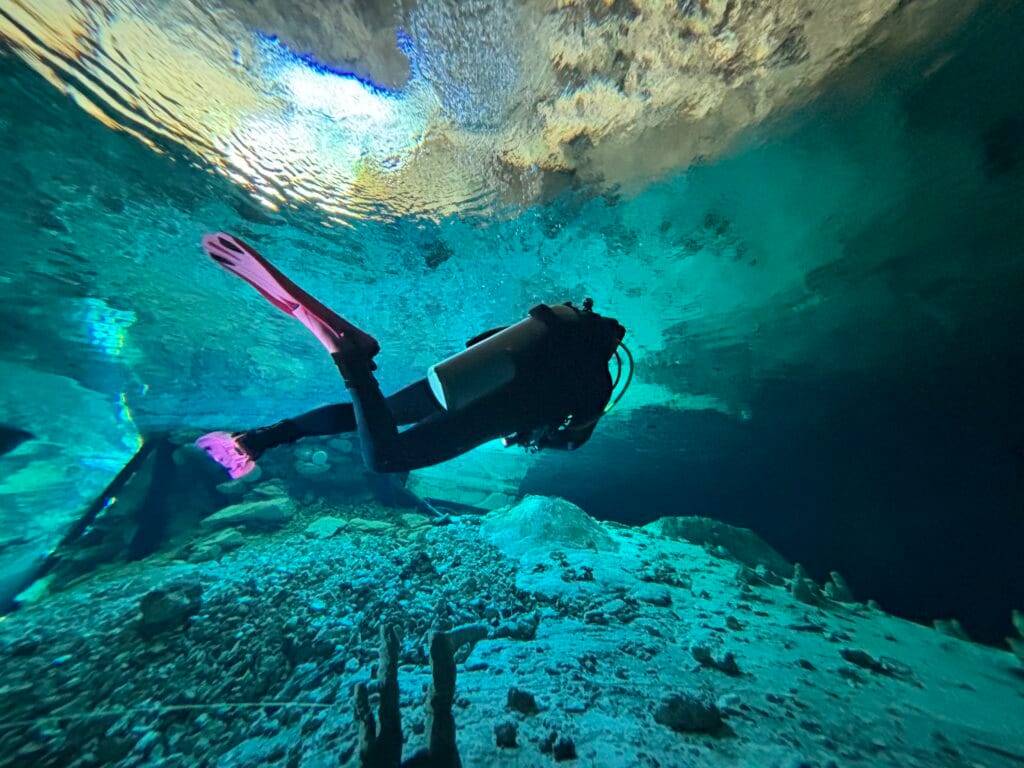
What Is the Mammalian Dive Reflex?
The mammalian dive reflex is a set of automatic physiological responses that are triggered when your face comes into contact with water, particularly cold water, while you hold your breath.
This reflex evolved to help mammals survive underwater for longer periods of time by conserving oxygen. It is especially powerful in marine mammals such as dolphins, seals, and whales, but humans still experience a milder version of the same response.
When the reflex is triggered, several things happen automatically:
- Your heart rate slows down (bradycardia)
- Blood vessels in your arms and legs constrict
- Blood is redirected toward vital organs such as the heart and brain
- Oxygen consumption in the body decreases
In simple terms, your body shifts into an energy-conserving mode designed to help you stay underwater longer.
What’s remarkable is that this process happens whether you’re aware of it or not.
The Connection to Your Nervous System
To understand why this matters for divers and mindfulness practitioners, it helps to understand the nervous system.
Your autonomic nervous system has two primary branches:
The sympathetic nervous system, often called the “fight-or-flight” response, prepares your body for action. Heart rate increases, breathing becomes rapid, and stress hormones are released.
The parasympathetic nervous system, sometimes called the “rest-and-digest” response, does the opposite. It slows the heart rate, promotes relaxation, and helps the body recover.
The mammalian dive reflex activates the parasympathetic nervous system through stimulation of the vagus nerve, one of the body’s most important calming pathways.
This is one reason many people feel noticeably more relaxed after spending time in the water. Another reason is the Blue Mind Theory.
The body is literally receiving signals that encourage a calmer physiological state.

Why Divers Often Experience Deep Presence
Many divers report entering a state that feels similar to meditation.
Underwater, you naturally become more aware of your breathing. Movements slow down. External distractions disappear. The mind has fewer things competing for attention.
At the same time, the mammalian dive reflex may be helping shift the nervous system toward a calmer state.
This combination creates ideal conditions for mindfulness.
Instead of thinking about yesterday or tomorrow, your attention is drawn to the present moment: the sound of your bubbles, the rhythm of your breath, and the life unfolding around you.
The ocean becomes an anchor for awareness.

The Ocean as a Mindfulness Tool
Mindfulness is often described as paying attention to the present moment without judgment.
Many people practice mindfulness while sitting on a cushion. Others find it while walking in nature.
For divers, the underwater world can become a unique mindfulness environment.
The mammalian dive reflex doesn’t replace meditation practice, but it may help create a physiological foundation that supports calm, focus, and presence.
In a world filled with constant notifications, noise, and stimulation, the ocean offers a place to truly slow down.
Perhaps that’s one reason so many people leave a dive feeling refreshed, grounded, and connected—not only to the ocean, but to themselves.
The next time you descend beneath the surface, take a moment to notice your breath, your heartbeat, and the stillness around you.
Your body already knows how to relax. The water is simply helping it remember.
Stay Connected
If you enjoyed this article, you’re exactly the kind of person I love connecting with.
I spend a lot of time exploring the intersection between the ocean, mindfulness, diving, conservation, and the fascinating ways our bodies and minds interact with nature. If that sounds interesting to you, there are a few ways we can stay in touch.
📩 Join my newsletter for new articles, diving insights, mindfulness practices, ocean science, and occasional updates from my adventures above and below the surface.
🌊 Join my Facebook community if you’d like to connect with other ocean lovers, divers, and curious humans who enjoy conversations about marine life, mindfulness, and our relationship with the natural world.
📸 Follow me on Instagram or Facebook for photos, videos, behind-the-scenes stories, and bite-sized ocean facts that don’t always make it into my blog posts.
💬 Reach out directly. I genuinely enjoy hearing from readers. Whether you have a question, a story to share, feedback on an article, or simply want to say hello, don’t hesitate to send me a message.
The best conversations often start with a shared curiosity about the ocean.
Thanks for reading, and I hope to see you somewhere—whether that’s in your inbox, on social media, in the Facebook group, or underwater someday.