
If you’ve ever seen those unreal photos of light beams cutting through crystal-clear water and thought “Okay, but what IS that place?” — welcome to the world of cenote diving.
Visually striking, but it’s actually a bit more structured and carefully managed than it often appears on social media.
Here’s a straightforward breakdown of what it is, what to expect, and whether it’s a good fit for you.
What is a cenote
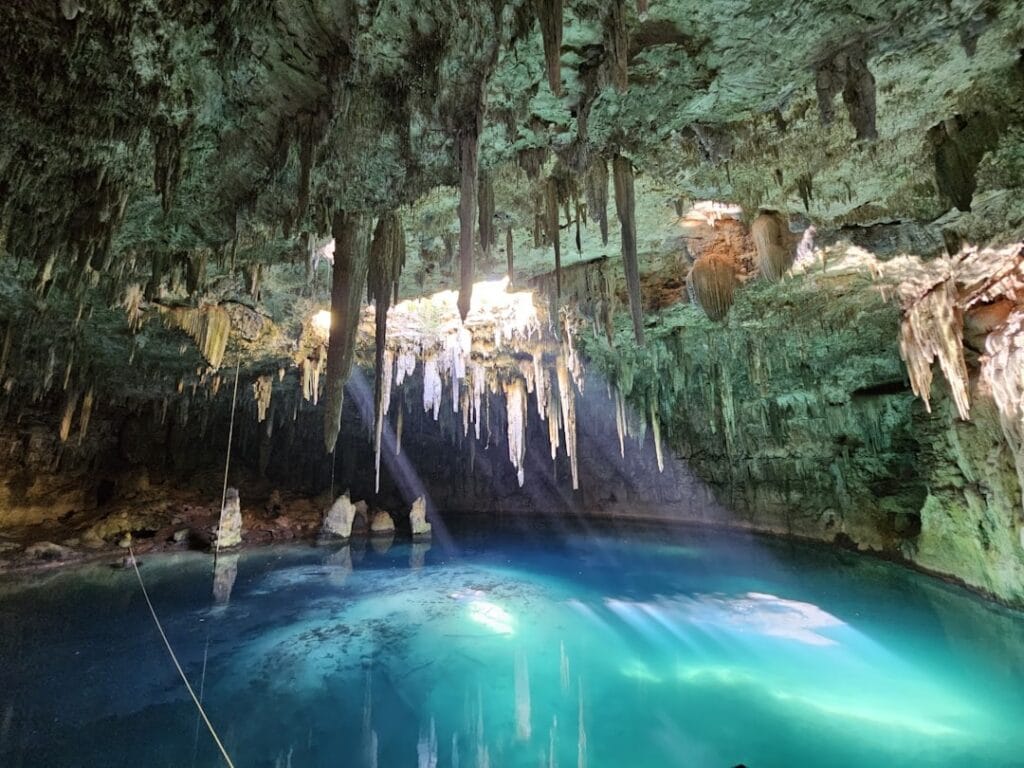
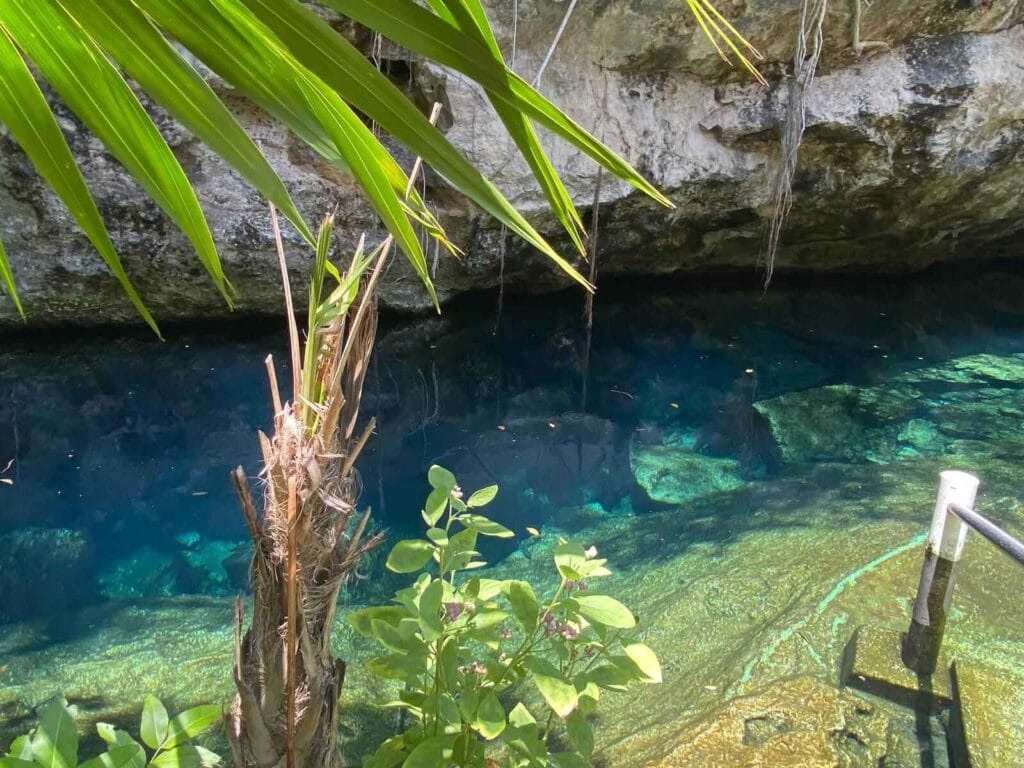
A cenote (seh-NO-tay) is a natural sinkhole formed when limestone collapses, exposing groundwater beneath. Cenotes cover the entire Yucatan Peninsula, with the largest concentration of “diveable” cenotes in the jungle between Playa del Carmen and Tulum.
That groundwater? Part of an enormous underground river system running through the Yucatán Peninsula.
So when you go cenote diving, you’re not diving in the ocean — you’re diving in:
- Freshwater (or a mix of fresh + salt)
- Underground caverns and caves
- Water so clear it feels fake
Mayan cenote history
The original discoverers of cenotes were the Mayans. To the Maya, cenotes weren’t just pretty swimming holes — they were sacred.
The ancient Maya believed cenotes were portals to the underworld (called Xibalba), and they used them for:
- Ceremonial offerings
- Rituals
- Water sources
Some cenotes contain archaeological findings—ceramics, tools, and human remains—dating back over 1,000 years to the Late Classic and Postclassic Maya periods (around 600–1500 CE). Others hold even older prehistoric remains, going back thousands of years.
Because of this, many cenotes are protected as cultural and natural heritage sites.
Diving access is regulated to preserve both the fragile geological formations and any historical material that may still be present.
So while cenote diving is visually stunning, it’s not just a scenic environment—it’s a space with real historical and cultural significance.
So while cenote diving is visually stunning, it’s also a place of real cultural significance—good buoyancy and a no-touch mindset aren’t just best practice, they help protect something that’s been here, undisturbed, for centuries.
What can be seen while cenote diving
This is where people get surprised.
Because if you’re expecting sharks and turtles… wrong environment.
Cenote diving is less about marine life and more about the environment itself.
What you will see:
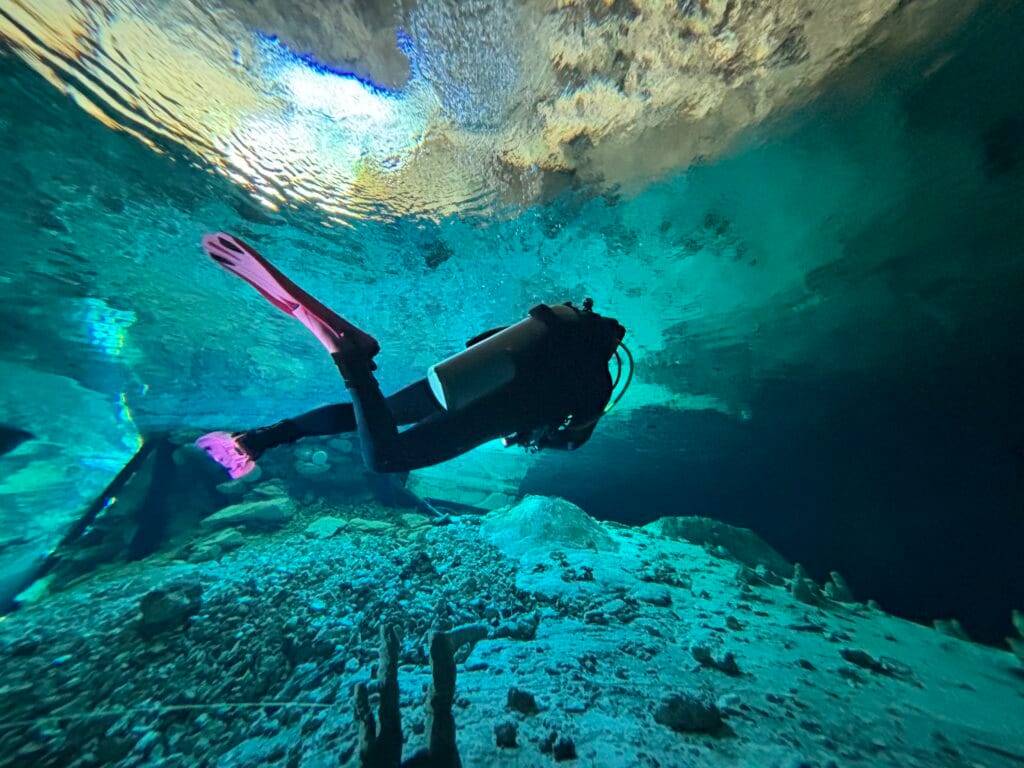
- Light beams (the famous ones — best midday)
- Stalactites & stalagmites (ancient rock formations)
- Haloclines (where saltwater and freshwater meet — looks like you’re diving through heat waves)
- Tree roots growing down into the water
- Occasional small fish or shrimp
What you won’t see:
- Big pelagics
- Coral reefs
- Large marine animals
It’s more like exploring a natural museum than going on a wildlife safari.

Difference between cave diving and cavern diving
This is a big one — and where a lot of confusion (and bad decisions) can happen.
Cavern diving (what most people do):
- You always stay within sight of the entrance/light
- Guided by a professional
- No special certification required beyond basic open water
- This is what 99% of “cenote diving” experiences are
Cave diving:
- No natural light
- Complex navigation
- Requires extensive technical training and certifications
- Not something you casually try on vacation
If someone tells you they went cenote diving and didn’t mention training for cave diving… they did cavern diving.
And that’s exactly what you should be doing unless you’re going down the full technical route.
Certifications required for cenote diving
Good news: you don’t need to be a technical diver to experience cenote diving.
For recreational cavern dives, you typically need:
- Open Water certification (minimum)
- Good buoyancy control (your guide will care about this a lot)
- Comfort in the water
Some shops may recommend:
- Advanced Open Water (helpful but not always required)
For actual cave diving, you’d need:
- Cavern Diver certification
- Cave Diver certifications (multiple levels)
- Technical diving experience
If you’re reading this and thinking, “I just want to see the pretty light rays,” you’re firmly in cavern territory.
Typical day for cenote diving for recreational divers
Here’s what it usually looks like:
Morning:
- Meet at the dive shop
- Gear fitting + paperwork
- Drive to cenote (usually 30–60 min)
At the cenote:
- Detailed briefing (pay attention — overhead environment = rules matter)
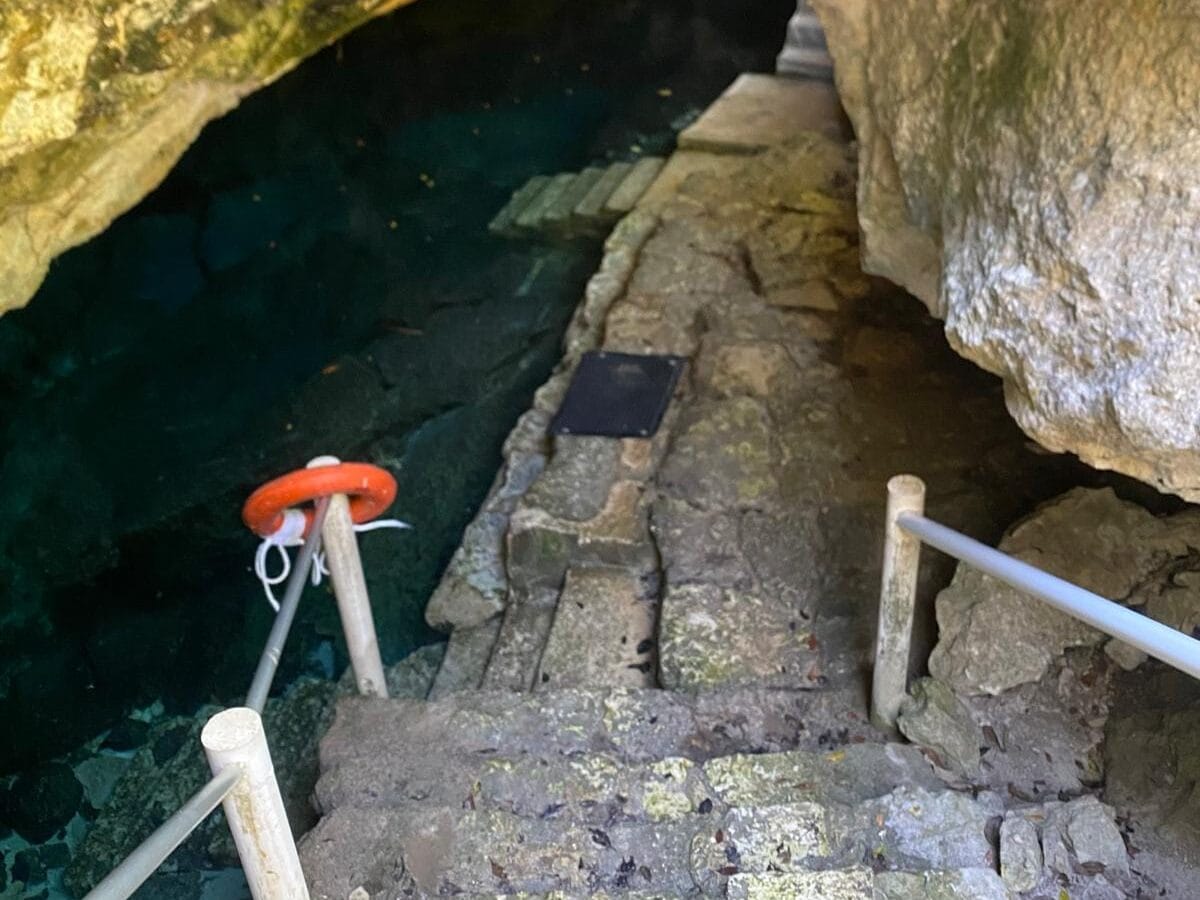
- Entry is often via steps or a platform (not a giant stride off a boat)
The dives:
- Typically, 2 dives in different cenotes or different lines
- Slow pace, controlled movement
- Following a guide along a fixed line
- Lots of stopping to look at formations/light
Between dives:
- Chill, snack, debrief what an incredible experience that was
After:
- Back to town
- Begin planning the day’s cenote dives
How cenote diving differs from ocean diving
This deserves its own moment because it feels completely different:
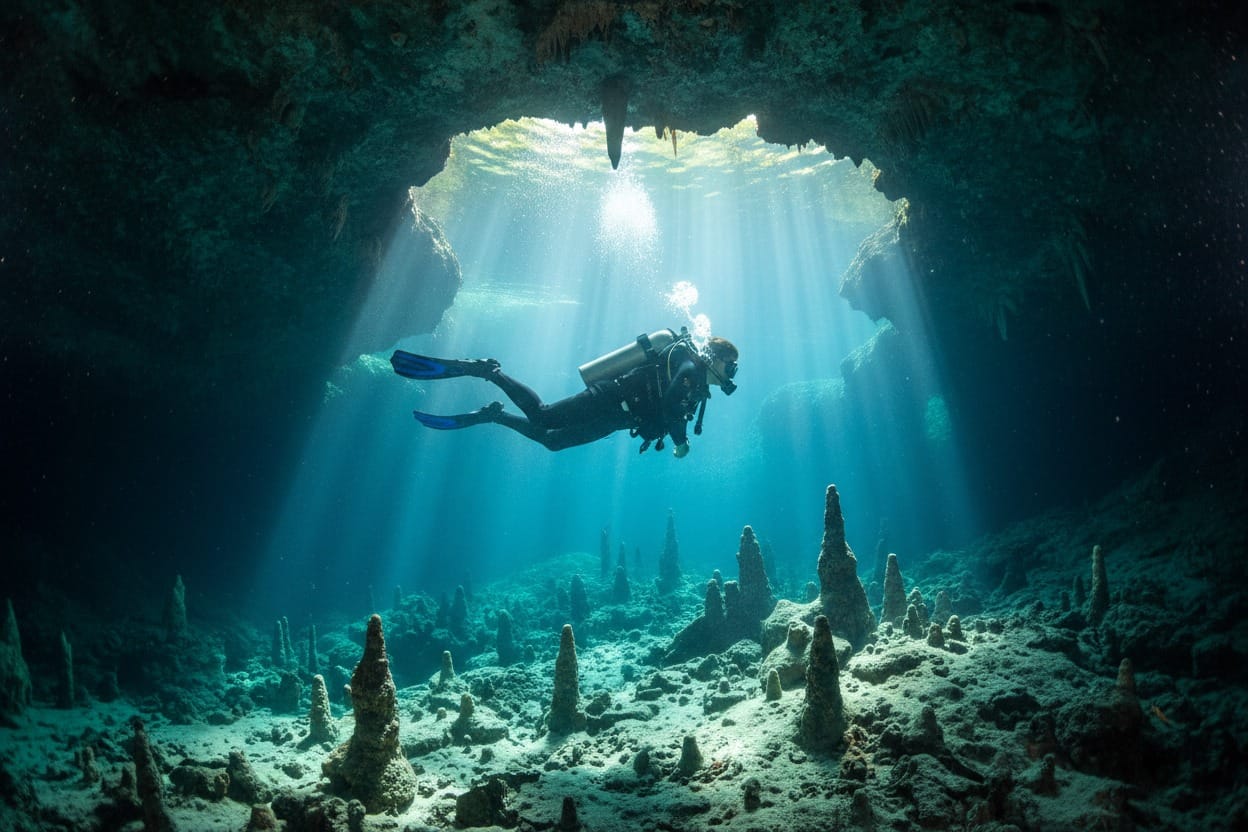
- No waves, no current
- Insane visibility (100+ feet / 30+ meters)
- Very calm, almost meditative
- More technical awareness (positioning, buoyancy)
A lot of people say it feels closer to flying than diving.
And honestly… I think they’re on to something.
FAQs about cenote diving
Is cenote diving safe?
Yes — when done with a certified guide and within recreational limits. The structure and rules are there for a reason.
Do I need perfect buoyancy?
Not perfect, but decent. You don’t want to be the person finning into 10,000-year-old rock formations.
Is it scary?
More awe-inspiring than scary for most people. You’re not going into full darkness or tiny spaces on recreational dives.
Can beginners do cenote diving?
Yes, if you’re Open Water certified and comfortable in the water.
Best time of day to dive cenotes?
Midday for light beams (roughly 11 am–2 pm, depending on the cenote).
Can you snorkel instead?
Each cenote is different and therefore follows unique rules for that cenote. However, in many cenotes, yes — but you won’t access the same areas divers do.
Final thoughts on cenote diving
Cenote diving is often seen as a niche experience, but once you do it, it stands out as one of the most distinctive types of diving available.
It’s not focused on adrenaline or large marine life.
Instead, it’s about moving slowly, staying aware, and recognizing that you’re diving through formations that have developed over thousands—sometimes millions—of years.
When you look at it that way, it adds a different level of perspective to what might otherwise feel like just another day of diving.
Ready to book your cenote dive? In my opinion, The Cenote Guys offer the best cenote tours from Playa del Carmen.
Want to learn more? Check out the blog here to read about everything diving in Playa del Carmen, Mexico.
For a more personal connection, join my newsletter. On the first Sunday of each month, we’ll enjoy a virtual coffee together as I share underwater tales, Playa updates, and mindfulness advice for divers.
Looking for an even deeper personal connection? Check out the Mindfulness & Diving Facebook group for all things mindfulness and diving.