
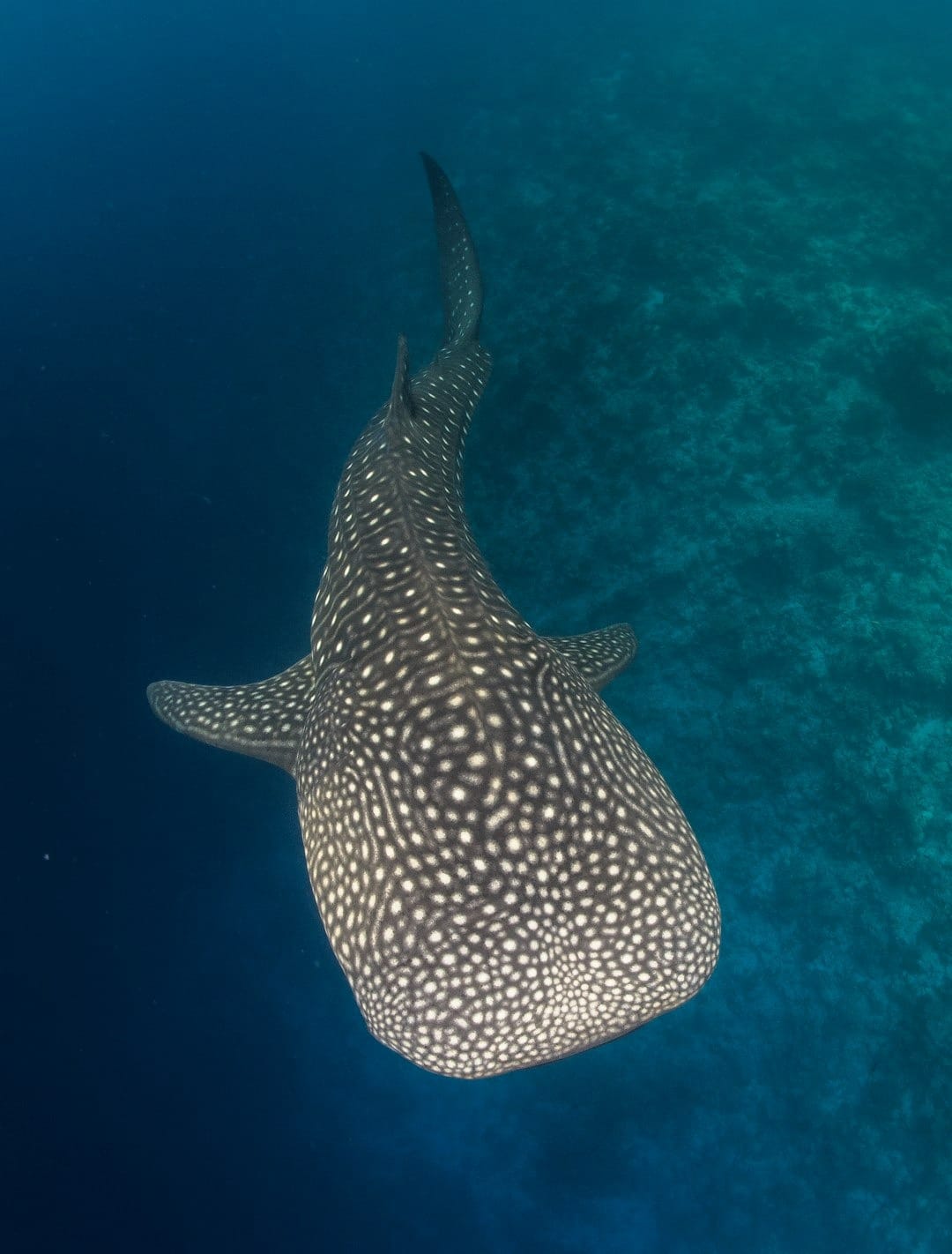
Wait, there are whale sharks in Cancun?
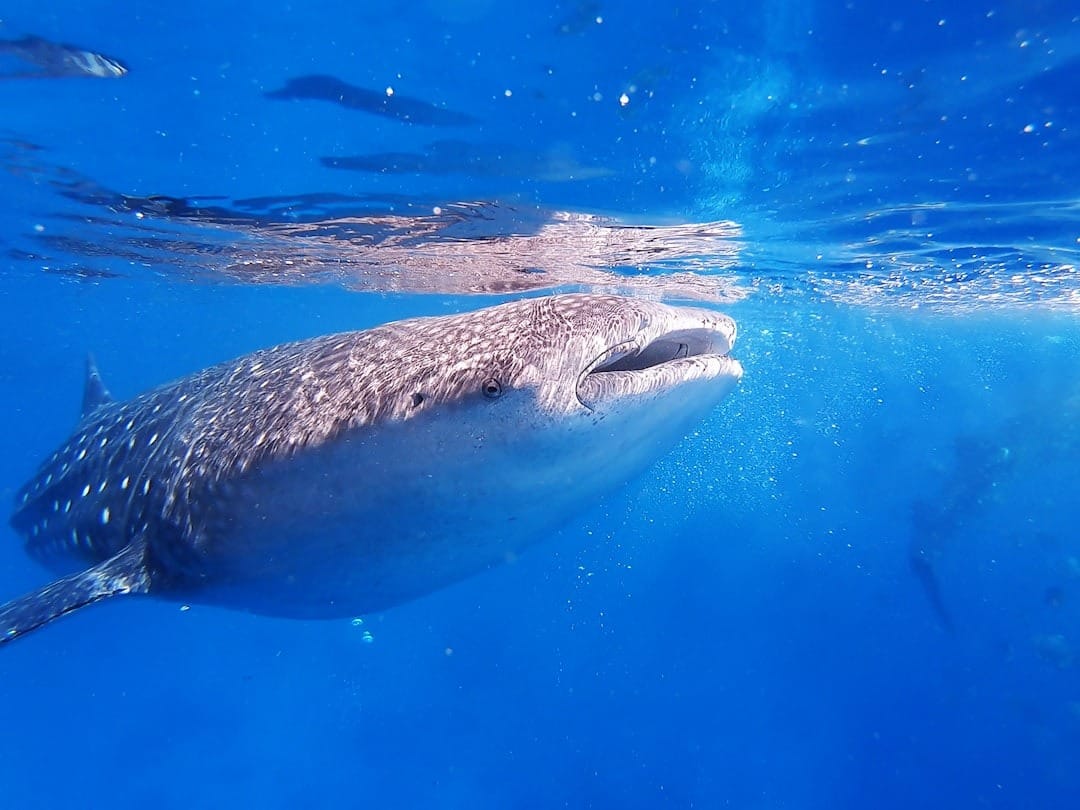
Yes, there are whale sharks in Cancun every summer. Warm water currents bring high volumes of plankton and krill to the tip of Cancun. High volumes of plankton bring large filter feeders that rely on this food source. You guessed it, this means whale sharks. It also means manta rays, but this post focuses on the sharks 😉
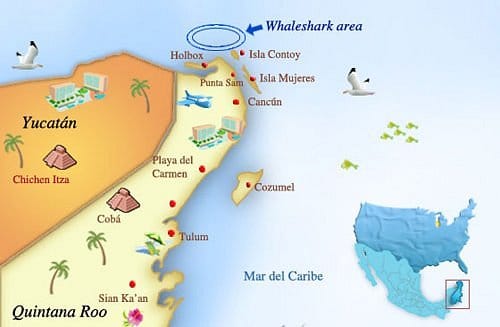
How Likely is it to See a Whale Shark in Cancun?
The season for whale sharks in Cancun is June-September.
Records show there are over 450 whale sharks who make the Riviera Maya their home for the summer! Cancun is one of the largest seasonal whale shark gatherings in the world.
Because of the surplus in food supply, whale sharks stay in the area for months to eat as much as possible. They sometimes even feed upright in the water, entering a semi-catatonic state. This means they have decreased awareness, which allows boats to get quite close.
The chances of getting in the water with a whale shark are high. Tour operators claim an 85-95% probability of seeing a whale shark during a tour in peak season (July-August).
How Do the Tours Operate?
Whale sharks are an endangered species. The area of the whale shark tours in Cancun is called the Whale Shark Biosphere Reserve. This area was established in 2009 to protect whale sharks and other animals that use the area for migration and feeding, such as turtles, seabirds, and manta rays. Whale shark tours leave from Cozumel, Isla Mujeres, Playa del Carmen, and Cancun.
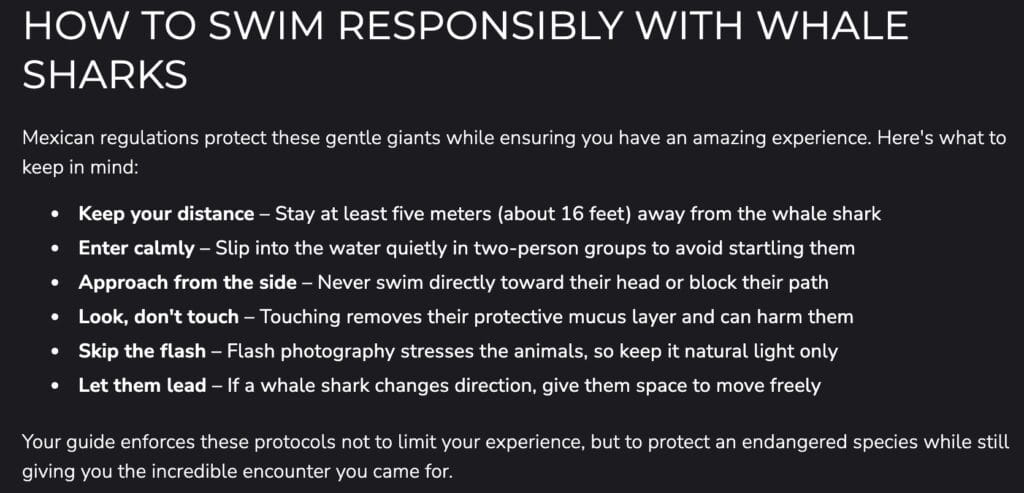
The above photo is a screenshot taken from a popular tour operator’s website. All tour operators you find will have some kind of literature on how to ethically swim with the sharks, keeping in line with governmental law.
Laws include:
- Swimmers can only enter the water if more than 5 whale sharks are spotted in the immediate area
- The official season dates for tours are set by the government
- June 15- September 15 are the official 2026 dates
- Life jackets must be worn at all times. This serves 2 purposes:
- 1 – Personal safety in deep water
- 2 – To discourage confident swimmers from swimming down with the whale sharks, potentially getting too close while underwater
- No fins allowed
- No sunscreen or other chemicals (even reef-safe products)
- Only boats with a CONANP permit may conduct tours in protected whale shark areas
This means there are more boats than whale sharks in protected areas.
As you can imagine, this does not create a safe space for the whale sharks.
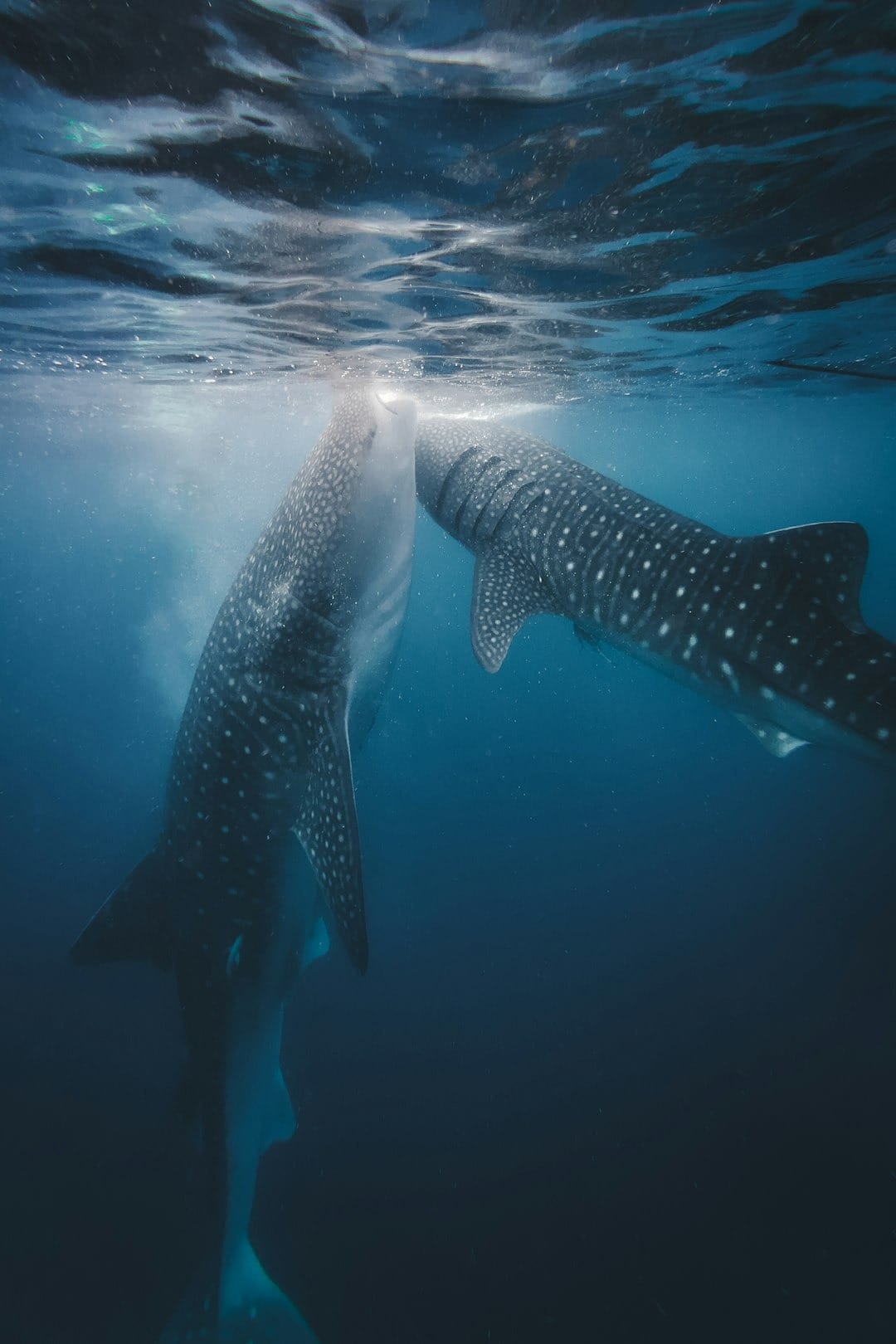
So Then Why Is Swimming With Whale Sharks Unethical?
Due to the responsible swimmer regulations, most tourists think they are choosing a responsible, environmentally friendly activity. Unfortunately, that’s exactly what those who profit off of you want you to believe. The reality is often quite different from what is publicized.
Here are the biggest dangers the whale sharks experience:
Boats
If you’re lucky, you’ll see many whale sharks on your tour. However, to be able to see them, you have to get close to them. An unfortunate reality is that whale sharks get hit by boat motors every year.
There are a myriad of reasons why a boat might come too close: to pick up a snorkeler, ensure those on the boat get a glimpse, or even uncontrolled ocean conditions could bring a boat closer to the animal than intended, resulting in an accident.
Crowding
There are more boats than whale sharks in protected areas.
There are an estimated 280-320 authorized boats in the Mexican Caribbean for the 2026 whale shark season.
This does not include the number of boats occupying the outskirts of the protected area, or those blatantly violating the law by entering without a permit.
On each boat, 10-25+ snorkelers are waiting to get in the water. Thes numbers will obviously create situations where there are too many snorkelers in the water per whale shark. This causes immense stress to the animals. They often feel trapped.
Scientists have observed changes in migratory and feeding patterns due to tourist crowding. The increased number of boats every season only adds to this problem, even if you don’t get in the water.
Human Touch
One of the biggest rules in the ocean is don’t touch anything. While this is important for personal safety, it’s actually more for the benefit of the animals. Whale sharks, among other marine animals, have a mucus coating around their bodies. This helps them protect against diseases or parasites. When humans touch the animal, it can wipe off that invisible coating, leaving them at risk of getting sick.
Getting too close to the whale sharks also increases the chances of hurting them. This could be by kicking, riding, or requiring the boats to get too close in case of emergency. This can create extremely dangerous situations for the whale shark.
My final point is on the topic of consent. I believe that animals have the right to accept or not to be touched. Have you ever had a dog sniff your hand “for permission” before giving it a pet? I don’t know about you, but I don’t regularly communicate with whale sharks to intimately understand their behaviors, so I will err on the side of caution and keep my hands to myself out of respect.
If you MUST swim with the whale sharks in Cancun, here are my recommendations.
In my opinion, the most sustainable option is not to swim with the whale sharks. But I would be lying if I said I didn’t understand that it is an incredible experience some people spend a lifetime dreaming about.
So, if you are still sure you want to swim with wild whale sharks in Cancun, here’s how I’d do it as ethically as possible.
I would contact the tour operator and ask them the following questions*:
- Is your operation registered with CONANP?
- How many snorkelers are on the boat?
- How many swimmers are in the water at a time? (Legally, the answer is 2 swimmers per guide in the water at one time)
- How long do I get to swim with the whale shark? And how close can I get? (Typical tours allow swimmers in the water for 60-90 seconds at a time. Law dictates that a minimum distance of 2 meters (7 feet) must be kept at all times)
- What else do you do to support the conservation of whale sharks? (Some operators may contribute to scientific projects. If you find an operator like this, send me an email! I am always looking for reputable, eco-friendly people in Playa del Carmen!)
If you are dissatisfied with the answers you receive, I encourage you to do the responsible thing and skip this activity. But not to worry, there are tons of other incredible, ethical experiences in the Mexican Caribbean, such as scuba diving with bull sharks.
*Keep in mind, there is still the chance the operator could lie to you and sell you an unethical tour. Unfortunately, as is the case with travel, you never fully know what to expect until after you get there.
Based on my research, here are some tour operators you can start your search with:
Marina’s Opinionated Corner
There is definitely mixed information out there for this activity. I’ve heard personal accounts from divers saying it was an incredibly sustainable activity. On the other side, I’ve also heard that the tours do more harm than good for the sharks.
The Mexican government has done a great job creating regulations that could make snorkeling with whale sharks a very sustainable, eco-friendly activity.
Unfortunately, I believe the reality doesn’t quite match up. Boats are often overloaded with too many people, tour guides don’t properly inform or regulate tourists, and boats without permits still conduct these tours in unethical ways.
Unlike the bull shark dive in Playa del Carmen, which actively benefits the sharks, there appears to be little accountability on the tour operators to strictly follow the rules.
Unfortunately, because day-to-day operations on the water are hard to regulate, it is hard to classify the activity as a whole as fully ethical. Some day, I hope more accountability will be taken, and you’ll be able to see the whale sharks in the Riviera Maya in a sustainable way. But until then, you won’t see me on any whale shark snorkeling boats.
Thanks for reading! I’d love to hear your thoughts on this post, especially if you’ve actually been swimming with the whale sharks in Mexico. Leave me a comment, or let’s connect on Instagram or Facebook!
Want to learn more? Check out the blog here to read about everything diving in Playa del Carmen, Mexico.
For a more personal connection, join my newsletter. On the 1st & 3rd Sundays of each month, we’ll enjoy a virtual coffee together as I share underwater tales, Playa updates, and mindfulness advice for divers.
Looking for an even deeper personal connection? Check out the Mindfulness & Diving Facebook group for all things mindfulness and diving.