
Ok, so I wrote a pretty scathing review of swimming with whale sharks in Cancun. I concluded that it is NOT ethical to swim with whale sharks… But then I was sent on a contract to guide a group of snorkelers with the whale sharks in Cancun.
So many locals told me how unethical it was, and I’d clung to that. But maybe the experience would be better than I’d expected. I know there are many organizations in the Yucatan who are always fighting to improve conservation efforts of all types in the Mexican Caribbean. Maybe the whale shark activity had improved?
And, I reasoned, if it was as bad as I’d thought, then I would have the opportunity to tell this company to stop sending groups to this activity. I had the potential to make a real change due to my position within this company.
So, I signed the contract and prepared for the worst.
What is it like to swim with whale sharks in Cancun?
We partnered with Eco Colors Tours for the Whale Shark Snorkel Experience in Cancun, Mexico.
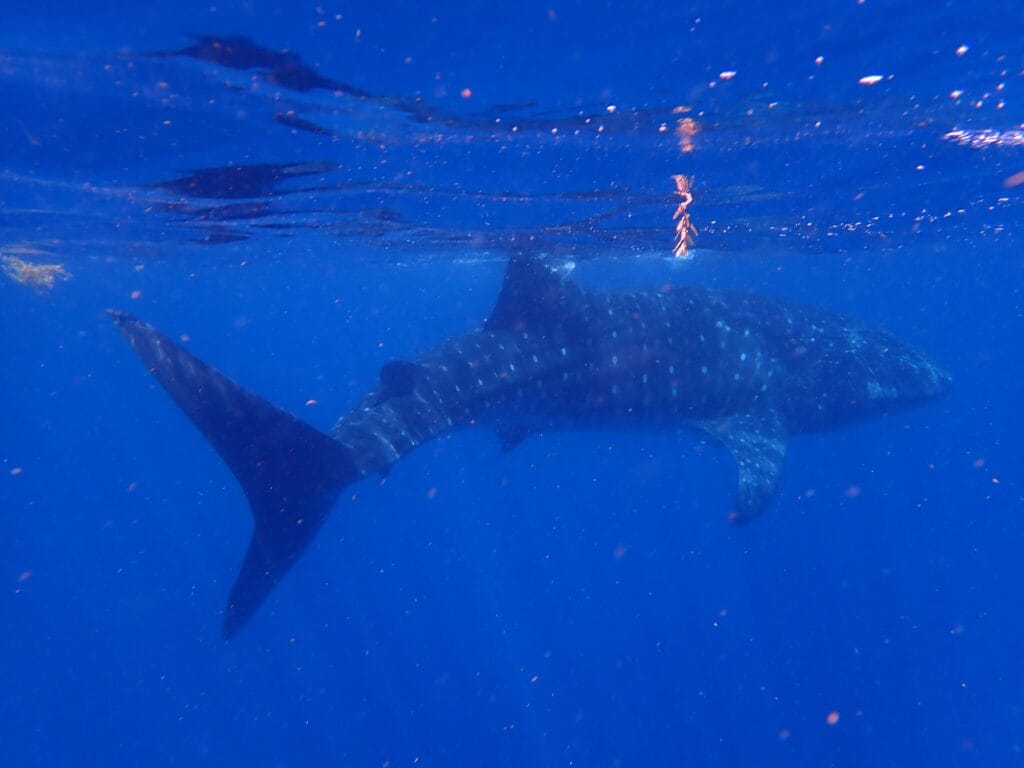
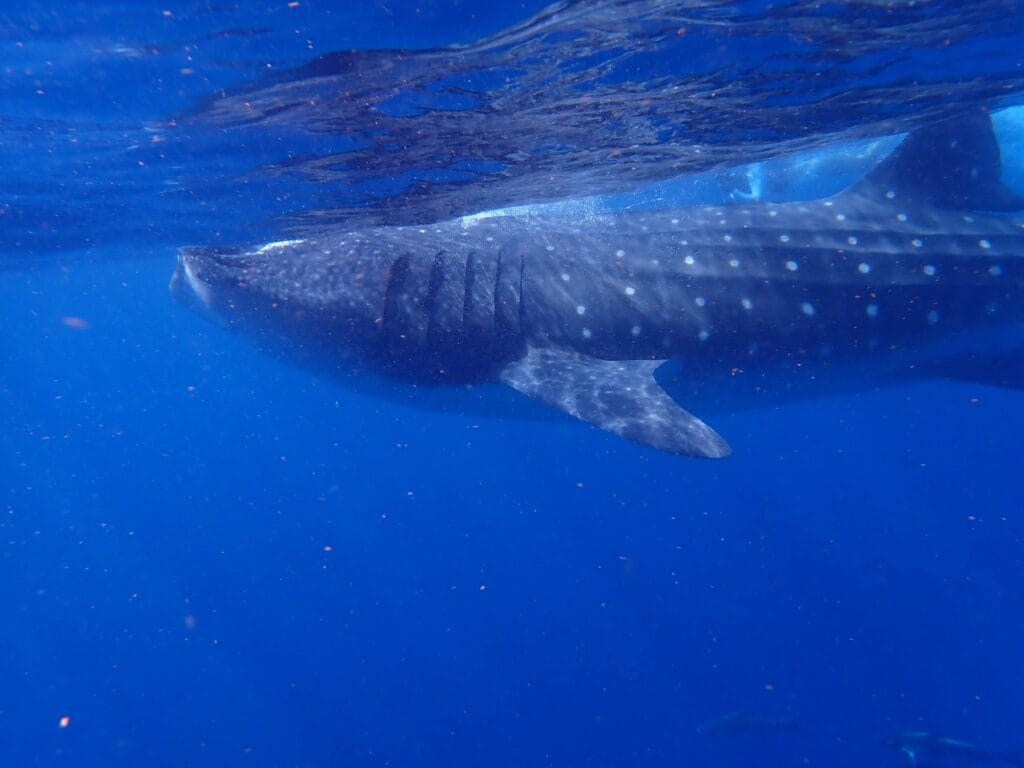
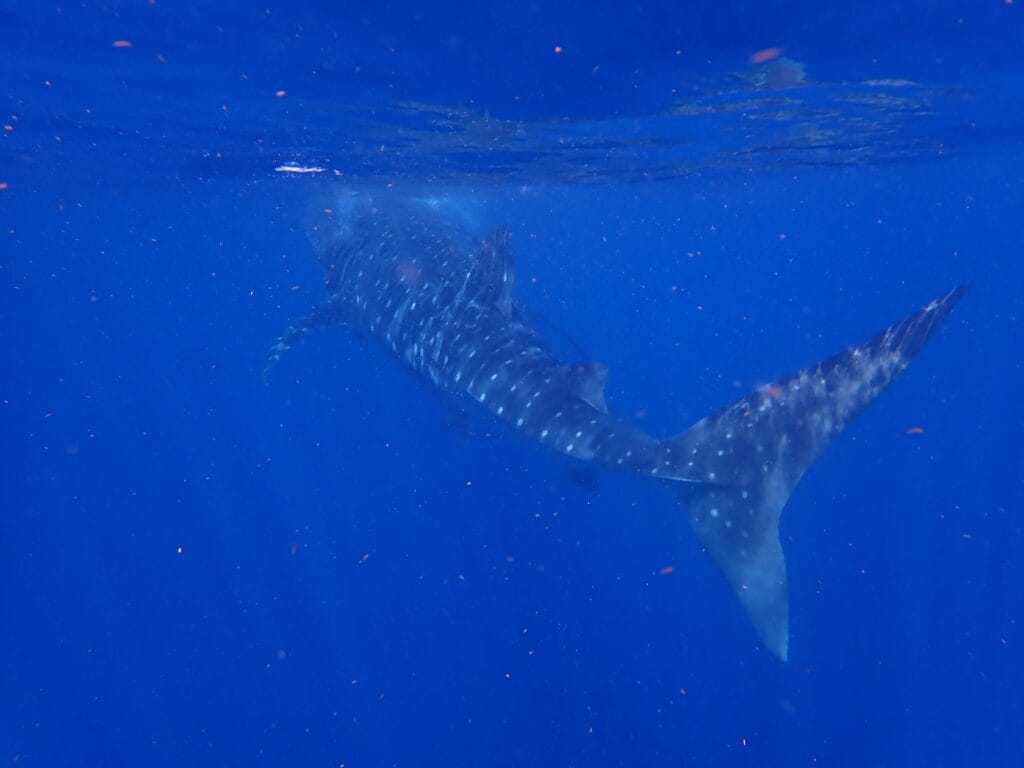
What are whale sharks? First and foremost, they are sharks – not whales. And, they are the largest fish in the ocean. They get their name “whale” shark because of both their massive size and their feeding behavior. Unlike what you typically think of with sharks, these gentle giants are filter feeders. This means their mouths create a kind of sieve, or net, to filter ocean water. Small organisms like plankton and shrimps fit through their net-like teeth, while larger animals like fish do not. This is the same way many whales eat!
I remember when I first learned what a whale shark was. I was about 7 years old and completely obsessed with ocean documentaries on The Animal Planet. For me, they sparked an insatiable hunger to know the ocean more intimately. To be given a chance to see one in the wild felt truly like a dream come true. Even though I was skeptical about the activity, part of me was 7 years old again, jumping for joy at the chance.
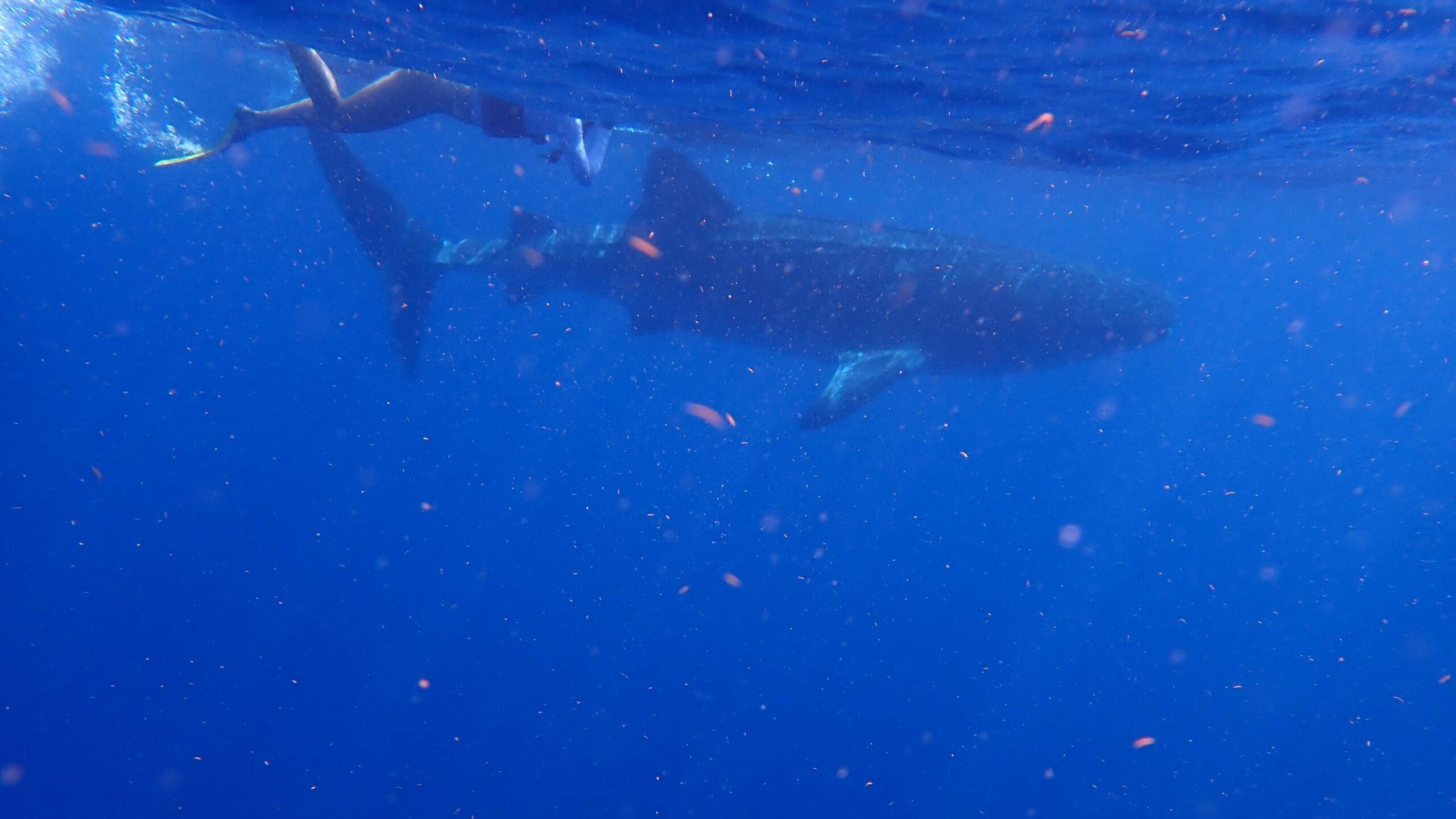
When we saw our first whale shark fin, I gasped. When that same shark came gliding along the surface right next to our boat, a few tears fell from my eyes.
The feeling underwater was like nothing I could describe. On my first jump, I saw 3 whale sharks and 2 manta rays. I couldn’t have drawn a better picture if I’d tried.
The Itinerary
8 am – We arrived at the marina in preparation for our journey.
Eco Color Tours set up a little breakfast station with coffee, teas, and toast. While we enjoyed these treats, our experienced guide told us everything we needed to know about the whale sharks in Cancun.
9 am – We were off!
We journeyed far off the coast until we couldn’t see any land anywhere. The sharks migrate to this area every summer when warm water brings an influx of plankton for them to eat.
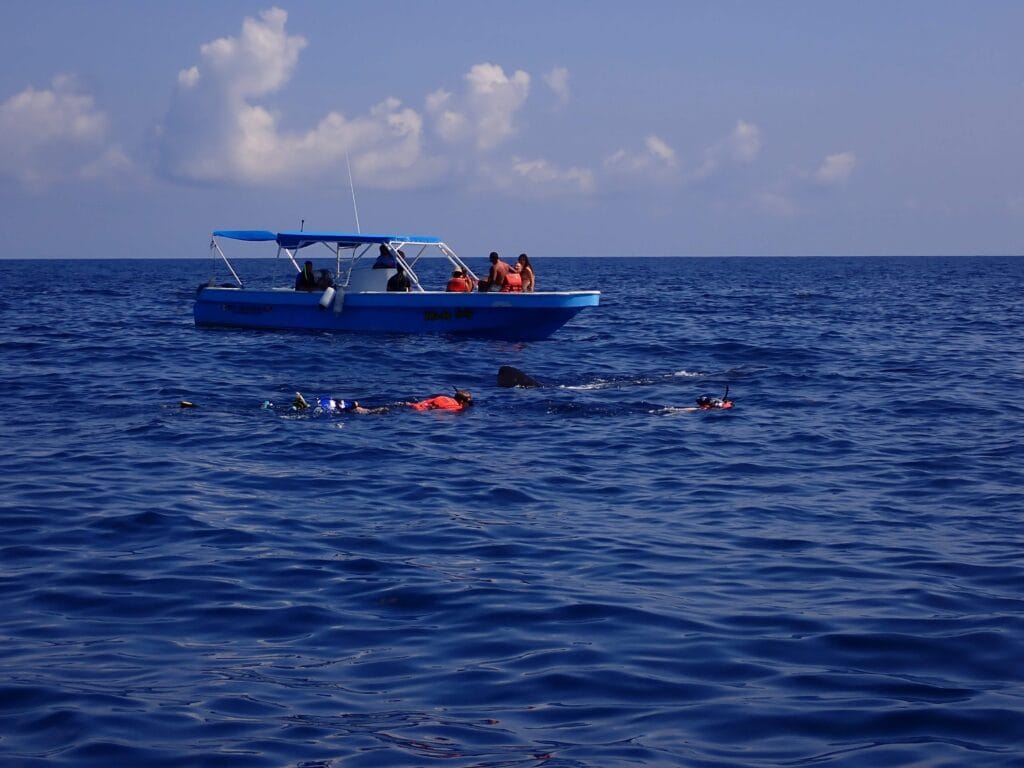
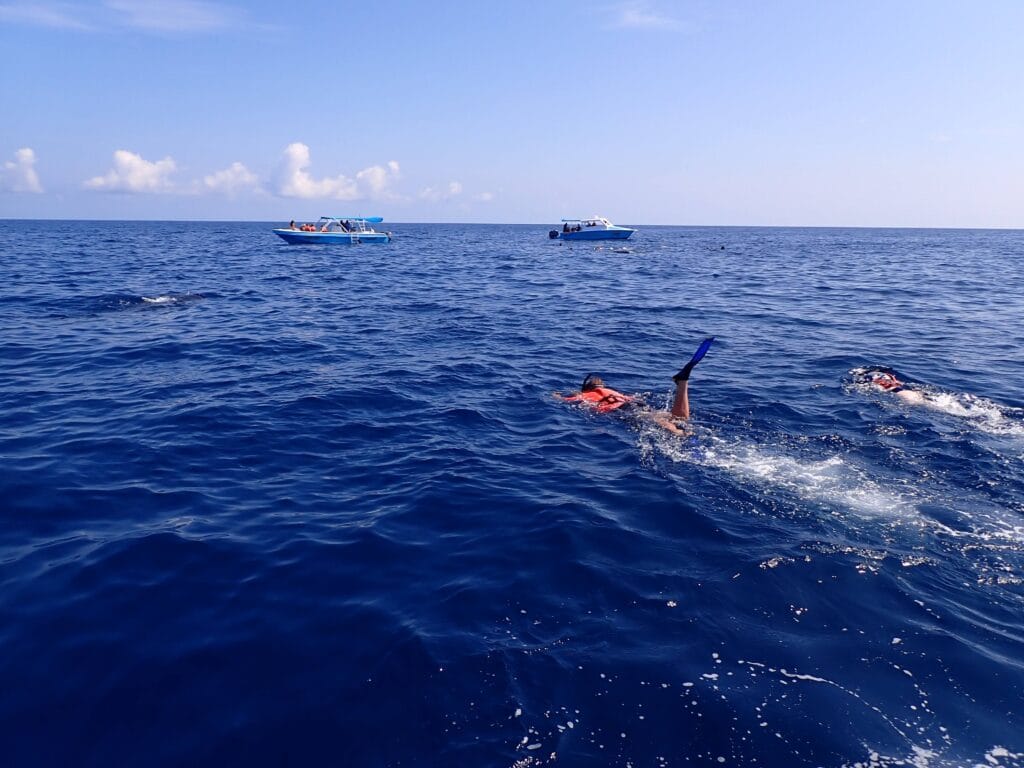
Over an hour after we left the marina, we thought we saw an island in the distance. As we got closer, we realized it was a fleet of about 50 boats on the horizon. I looked to my colleague, wondering what we’d gotten ourselves into. Surely this many boats cannot be good news for the sharks. We anticipated severe overcrowding and other unethical behaviors. Then, our boat slowed, joining the massive fleet.
10:20 am – We saw our first fin.
We actually saw our first whale shark before we even arrived at the island of boats. Our guide told us they would be hard to spot, despite their giant size. We looked for a rounded black fin, small bubbles at the surface, and the undeniable break in the waves that was actually an ocean colored body as the shark glided close to the surface without breaking it. Once we realized the dark shapes we were seeing weren’t small waves, the boat erupted in cheers! Whale sharks were everywhere!
Everyone grabbed their snorkel masks and fins, ready to jump in.
10:40 am – The first jump.
We arranged our group in pairs, with the first pair sitting on the side of the boat. When the captain gave the word, the first pair slid gracefully into the water. The guide stayed close, telling the swimmers where to go and how to maintain proper distancing.
10:42 am – The second jump.
Each pair only gets 2 minutes in the water. Then, the captain drops the following pair and picks up the first. The first pair hugged their friends and shouted “WOW” as they ditched their snorkel gear. We continued in this manner until the end of the activity.
11:15 am – Waving goodbye to the whale sharks.
Each pair had gotten 2 chances to swim. The captain followed the congregation of sharks, ensuring everyone got a chance. This is not always the case, so we thanked our lucky stars that day the sharks decided to hang around. We left the area and made our way to Isla Mujeres for lunch.
12:30 pm – Ceviche in the beautiful Caribbean.
Our boat anchored on a shallow beach of Isla Mujeres. Our group relaxed in the sun or snorkeled while the boat crew prepared lunch. We had fresh, homemade ceviche and guacamole – Mexican Caribbean staples.
1:30 pm – The final journey.
After about an hour of eating, swimming, and enjoying all of the Caribbean sun, we left Isla Mujeres. The way back to Cancun is so shallow, you can see the reef pass under the boat for almost the whole ride. The blue was out of this world vivid.
2:30 pm – The end of the trip.
We made it back to the marina. There were some whale shark-themed souvenirs to buy. Then, Eco Colors Tours drove us back to our hotel, where we spent the rest of the day daydreaming of being back in the water with giants.
The Rules
I was extremely skeptical that the sheer number of boats present – approximately 50 – would make it so that any tour company could operate sustainably, but I am so glad to have found out I was wrong. There are strict rules every boat must follow – to the benefit of the sharks. We witnessed all of the captains holding each other accountable. The marine ranger was quick to call out bad behavior over the radio to specific boats and to tell the fleet when it was time to move on from specific sharks.
Our guide enforced the following:
- NO TOUCHING – this rule should apply to everything in the ocean, but it is very strictly followed with the sharks.
- MINIMUM 2 METERS – snorkelers are to remain 6 feet or more away from the sharks at all times.
- 2 snorkelers AT A TIME – this helps prevent overcrowding and ensures the guide can help everyone who’s in the water.
- MUST WEAR A LIFE JACKET – you are swimming in over 1,000 feet of deep water, choppy water… accept the life jacket. But actually, the life jackets are there to prevent snorkelers from diving down and swimming underneath them. The inconvenience is an intentional design to keep snorkelers slow and away from the sharks.
- 2 MINUTE SWIM TIME – whale sharks move really quickly, so keeping up with them for 2 minutes is hard enough. 2 minutes helps ensure all snorkelers on the boat get equal chances to swim with the whale sharks, and prevents overcrowding.
- MAXIMUM 4 BOATS PER SHARK – this is to prevent overcrowding on one specific shark. The marine ranger did a great job of assigning boats to different sharks to disperse the masses.
- MUST GO WITH A GUIDE – to help ensure these rules are followed in the water, each pair of snorkelers must be accompanied by a guide. We witnessed many guides pulling people away from the sharks by their life jackets to prevent them from getting too close. They also did a great job showing us where to swim to get the best angles with our video cameras.
Still, things go wrong.
The whale sharks in Cancun come to feed in the summer months. Because of this, they are solely focused on their feeding behavior and don’t pay attention to where they are going.
The benefit of this: We get extremely close encounters with these gentle giants.
The con: They are less aware – meaning they often don’t see propellers until it’s too late.
Boat strikes are one of the biggest dangers a whale shark faces in these touristic areas. On our trip, we actually witnessed a minor strike. Luckily, the whale shark was ok with no visible injuries, but it was eye-opening to realize just how dangerous this activity can be for these sharks.
Boat Strikes Whale Shark!
Simply put, the captain of the boat was too close to the shark. He was watching his clients get on the boat instead of his boat’s positioning. As his clients climbed the ladder, the slow-moving propeller hit the dorsal fin of a juvenile whale shark.
The captain of our boat jumped on the radio, yelling at him in Spanish before the strike even occurred. It was incredibly heartwarming to see all of the other captains in the area shouting to direct the boat to a safer location – away from sharks and swimmers alike.
After the incident, our guide told us the company would be formally reporting that captain for negligence against the sharks. This is not to punish that captain for his mistake, but to uphold the strict regulations which are essential in keeping the sharks safe, which will in turn keep this activity running for many years to come.
Where to Book
While there are governmental regulations in place, it truly matters which company you book with. Yes, there is a marine ranger monitoring activity on the water. Yes, there is accountability by some companies to uphold the safety of the sharks. But no, not every tour operator is created equal.
It matters who you choose to give your money to. Some people give their money to the cheapest tour possible. You are reading this blog because you care about this world. I trust you will choose to book with a reputable company that is doing their best for the environment.
As a sustainable traveler, these are the companies I support:
ECO COLOR TOURS (select the first listing)
My Personal Thoughts
I’d read a lot about this activity before I had a chance to see it firsthand. In my research, sharks were overcrowded, rules were not followed, and it did not appear to be a safe environment for swimmers or the sharks.
What I witnessed on this trip was completely different than I expected. However, there was still an accident. Some guides followed the rules more closely than others. But the boat I was on tried to do right by the sharks while still offering this experience. Everyone in this organization was concerned about the sharks’ well-being and the accountability of other operators.
The most notable voice on the radio was from the marine ranger boat monitoring everyone’s behavior. The ranger told captains when a shark had been bothered too long, which ones were further out, and predicted shark behavior to keep them safe and customers happy. If a boat was not following the rules, the ranger was on the radio enforcing regulations constantly.
In conclusion, it was not a perfect tour. It will not be the next model for sustainable travel. But, unlike the previous post I made about whale sharks, I do endorse this activity – with caveats.
And if you also have a deep-seated love for whale sharks, Cancun can be an ethical place to swim with them in the wild.
Thanks again to Eco Colors Tours for the amazing experience.
If you enjoyed this article, you’re exactly the kind of person I love connecting with.
I spend a lot of time exploring the intersection between the ocean, mindfulness, diving, conservation, and the fascinating ways our bodies and minds interact with nature. If that sounds interesting to you, there are a few ways we can stay in touch.
📩 Join my newsletter for new articles, diving insights, mindfulness practices, ocean science, and occasional updates from my adventures above and below the surface.
🌊 Join my Facebook community if you’d like to connect with other ocean lovers, divers, and curious humans who enjoy conversations about marine life, mindfulness, and our relationship with the natural world.
📸 Follow me on Instagram or Facebook for photos, videos, behind-the-scenes stories, and bite-sized ocean facts that don’t always make it into my blog posts.
💬 Reach out directly. I genuinely enjoy hearing from readers. Whether you have a question, a story to share, feedback on an article, or simply want to say hello, don’t hesitate to send me a message.
The best conversations often start with a shared curiosity about the ocean.
Thanks for reading, and I hope to see you somewhere—whether that’s in your inbox, on social media, in the Facebook group, or underwater someday.